
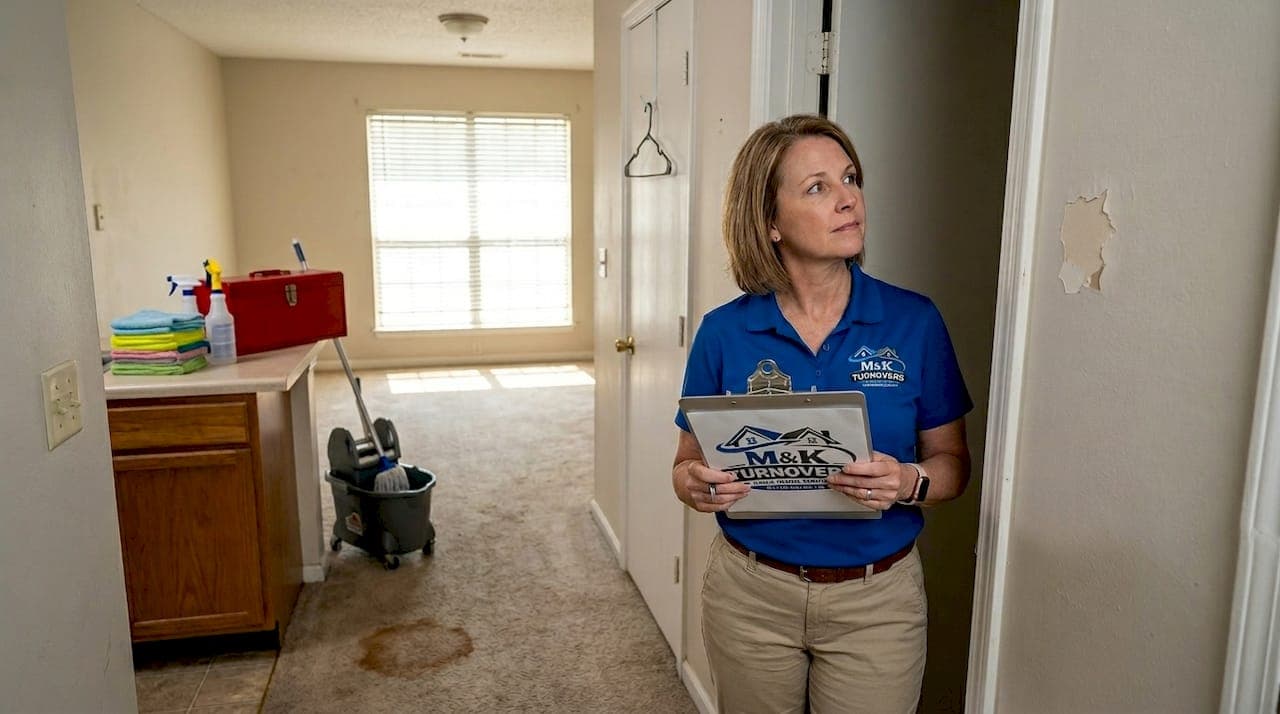
Rental turnover is one of the biggest cost centers for Louisiana landlords and property managers, yet it remains one of the most misunderstood. Many owners budget for a quick clean and a coat of paint, then get blindsided when the real numbers hit. The truth is that turnover costs average $2,500 to $5,000 per vacancy once you factor in everything. This article breaks down four persistent myths that quietly drain your budget, backed by real data and Louisiana-specific context, so you can make smarter decisions and keep your units producing income.
Table of Contents
- Myth 1: Turnover costs are low and mostly cleaning fees
- Myth 2: Tenants only move because of rent increases
- Myth 3: High turnover is unavoidable in Louisiana
- Myth 4: Keeping amenities and technology up-to-date matters most
- A rental turnover myth most landlords never question
- Maximize rental returns with expert turnover support
- Frequently asked questions
Key Takeaways
| Point | Details |
|---|---|
| Turnover is costly | Real turnover costs often exceed $2,500 per event, much higher than basic estimates. |
| Retention is not just about rent | Tenant retention relies more on maintenance and communication than keeping prices low. |
| Control is possible | Excellent management can achieve turnover rates far below local averages with the right strategies. |
| Essentials over extras | Focusing on fundamental property needs matters more than expensive upgrades for keeping tenants. |
Myth 1: Turnover costs are low and mostly cleaning fees
This is the myth that costs landlords the most money, because believing it means you never budget correctly. When a tenant moves out, the mental math most owners run goes something like this: cleaning fee plus a few repairs equals maybe $400 to $800. Done. But that math ignores the biggest expense on the list: vacancy loss.
Every day a unit sits empty is a day you are not collecting rent. In Baton Rouge, where average one-bedroom rents hover around $900 to $1,100 per month, a unit vacant for three weeks costs you $675 to $825 in lost income before a single contractor walks through the door. Add in professional cleaning, interior painting, minor repairs, carpet cleaning, and marketing costs, and you are already well past the "just a cleaning fee" assumption.
The real numbers tell a different story. Rental turnover costs range from $2,500 to $5,000, which means most owners are underestimating their actual exposure by 40 to 60 percent. Here is a breakdown of where those costs actually land:

| Cost Category | Estimated Range |
|---|---|
| Professional cleaning | $150 to $350 |
| Interior painting | $400 to $900 |
| Minor repairs and punch work | $200 to $600 |
| Carpet cleaning or replacement | $150 to $500 |
| Vacancy loss (3 to 4 weeks) | $700 to $1,400 |
| Marketing and leasing fees | $300 to $700 |
| Total estimate | $1,900 to $4,450+ |
And that table does not include sheetrock repair, tub resurfacing, or appliance work, which can push costs higher. Turnover services for property managers that bundle these tasks together often reduce total spend by cutting the time a unit sits idle.
Pro Tip: Build a turnover budget template that includes vacancy loss as a line item. If you only track maintenance invoices, you are missing the biggest cost driver in your portfolio. Turnover solutions for landlords who plan proactively almost always outperform those who react after the fact.
Myth 2: Tenants only move because of rent increases
With the real cost picture clearer, the next question is obvious: why are tenants leaving in the first place? Most landlords assume rent is the main driver. Raise the rent and you might lose someone. Hold it steady and they stay. It sounds logical, but the data does not back it up.
Poor maintenance is the top reason tenants leave, followed closely by communication problems. Rent increases actually rank third. That means the majority of your turnover is happening for reasons you have direct control over, and you may not even realize it.
Think about what that means operationally. A tenant who submits three maintenance requests and hears nothing back for two weeks is not going to renew, even if you never raise the rent. Meanwhile, the landlord assumes the unit is fine and the tenant is happy. That disconnect is where turnover quietly builds.
"Survey data reveals that property managers and renters are not aligned on what drives satisfaction. Managers overestimate the role of rent while renters consistently point to maintenance responsiveness and communication quality."
Here are the most effective retention levers that go beyond holding rent steady:
- Respond to maintenance requests within 24 hours, even if just to confirm receipt and set a timeline
- Schedule a mid-lease walkthrough at the six-month mark to catch small issues before they become reasons to leave
- Send a renewal offer 90 days before lease end, not 30, so tenants have time to consider it seriously
- Follow up after repairs are completed to confirm the tenant is satisfied
- Use a consistent communication channel, whether that is email, a portal, or text, so tenants always know how to reach you
Apartment turnover services that move fast after a vacancy help, but the real win is reducing how often you need them. Baton Rouge turnover experts who work with proactive managers consistently see shorter vacancy windows because the units are better maintained to begin with.
Myth 3: High turnover is unavoidable in Louisiana
Some landlords accept high turnover as a fact of life in Louisiana, especially in markets like Baton Rouge and New Orleans where the rental population is transient. Students, oil and gas workers, and military-adjacent renters do move more often. But accepting high turnover as inevitable is a mistake that costs you every single year.
Benchmarks matter here. Annual turnover rates run 30 to 40 percent for single-family rentals and 40 to 60 percent for multifamily, but high-performing properties consistently stay below 25 percent. That gap is not luck. It is the result of deliberate management practices.
| Property Type | Average Turnover Rate | Excellent Benchmark |
|---|---|---|
| Single-family rentals | 30 to 40% | Under 20% |
| Multifamily (small) | 40 to 50% | Under 25% |
| Multifamily (large) | 50 to 60% | Under 30% |
Louisiana-specific factors like hurricane season disruptions and seasonal job markets do create some natural churn. Baton Rouge and New Orleans vacancy rates have risen slightly in recent years, which makes it even more important to retain the tenants you have rather than compete aggressively for new ones.
Here are three practical steps to beat local averages:
- Track your turnover rate monthly, not just annually. Catching a trend early gives you time to respond before it becomes a pattern.
- Exit interview every departing tenant, even informally. A five-minute conversation often reveals fixable issues you did not know existed.
- Set a make-ready time target and stick to it. Units that sit vacant for more than 14 days after a move-out are losing money and momentum. Work with Lafayette turnover benchmarks and regional data to set realistic but aggressive goals.
Myth 4: Keeping amenities and technology up-to-date matters most
The amenities arms race is real. Walk through any new apartment community and you will see co-working lounges, smart locks, package lockers, and fitness centers. It is tempting to assume that adding these features to your existing units will drive renewals. The data says otherwise.
Managers overestimate the value of amenities and tech while renters consistently rank maintenance quality and safety as their top priorities. A tenant living in a unit with a leaky faucet and a broken door lock does not care about a new package locker in the lobby.
This is where well-meaning property managers make expensive mistakes. Common missteps include:
- Installing smart thermostats while deferred HVAC maintenance goes unaddressed
- Adding a dog wash station before fixing cracked sidewalks or poor exterior lighting
- Upgrading the leasing office instead of repainting unit interiors that tenants actually live in
- Purchasing property management software without improving the actual response time to maintenance tickets
- Offering move-in gift cards as a retention tool instead of fixing the issues that caused the last tenant to leave
None of these upgrades are bad ideas in isolation. The problem is sequencing. If your basics are not covered, amenities are a distraction. New Orleans turnover services that focus on interior quality, cleanliness, and functional repairs consistently produce faster re-leasing than properties that prioritize curb appeal upgrades.
Pro Tip: Before your next capital improvement decision, survey your current tenants with three questions: What is the one thing you wish we would fix? What keeps you here? What would make you leave? The answers will almost always point to basics, not bells and whistles.
A rental turnover myth most landlords never question
Here is a perspective that most turnover discussions skip entirely: obsessing over average costs and industry benchmarks can actually make you a worse operator.
Averages are useful for context, but they can also become a crutch. If your turnover costs $3,200 and the industry average is $3,500, you might feel fine. But what if a handful of simple, repeatable process improvements could get you to $2,000? The average does not push you toward that answer.
The landlords and managers we see operate most efficiently are not the ones who respond dramatically to big problems. They are the ones who build consistent routines: fast communication, regular walkthroughs, and a streamlined turnover process that starts the moment a notice is received. They treat turnover as a cycle to optimize, not a crisis to survive.
The most expensive mistakes in property management are rarely the dramatic ones. They are the small, fixable issues that compound quietly over months because no one was paying close enough attention. That is the myth worth questioning.
Maximize rental returns with expert turnover support
Understanding these myths is the first step. Acting on them is where the real savings happen.
M & K Turnovers works with property managers and landlords across Louisiana to make vacant units rent-ready fast, without cutting corners. From turnover cleaning and interior painting to sheetrock repair and tub resurfacing, we handle the work that gets your unit back on the market. Our services for property managers and services for landlords are built around clear communication, reliable scheduling, and fast turnaround. If you are ready to stop losing money on extended vacancies and start running a tighter operation, reach out to M & K Turnovers today.
Frequently asked questions
What is the average cost of rental turnover in Louisiana?
Typical rental turnover costs in Louisiana range from $2,500 to $5,000, including repairs, vacancy loss, and marketing. Many owners underestimate this figure by nearly half.
What are the main reasons tenants leave rental units?
Most tenants leave due to poor maintenance and communication, not rent increases as many landlords assume. Addressing responsiveness and upkeep is more effective for retention than holding rent steady.
What is considered a high turnover rate for rentals?
Turnover rates above 40 percent are high for multifamily properties, while excellent performers stay below 25 percent. Single-family rentals average 30 to 40 percent, with top operators staying under 20 percent.
Does updating amenities prevent turnover?
Amenities help at the margins, but maintenance and safety rank higher for renters than technology or upgrades. Fix the basics before investing in extras if your goal is retention.